A learning platform for students that encourages engagement and peer interaction while personalizing their learning plans

Timeline
14 weeks
Team
Divita Chillakuru
Role
Research, Ideation, User Testing, Design Systems, Rapid Prototyping
Methods
Interviews, Journey Map, Affinity Diagram, Info Arch, User Flows, Wireframes
Tools
Figma, Adobe Illustrator, Google Suites, Zoom
problem
The current educational system is criticized to be too “industrial” and cannot easily adapt to a student’s needs.

During the Industrial Revolution, schools were created to teach large groups of students in a single space efficiently and effectively. Administration enforced discipline by creating set places for students to study and utilizing a school bell to signal class changes -- similar to how bells rang signaling shift changes for manufactory workers.

Today's educational system is not so different: it’s a factory-like in that students are expected to stay seated at their desks and retain all of the information that the teacher provides regardless of their interests or specific learning styles. Due to Covid-19, students across the nation were sent home, restricting social interaction amongst peers and further emphasizing the current educational system’s weaknesses. The pandemic accelerated the process of re-evaluating what “education” truly means and what students require to thrive and learn.

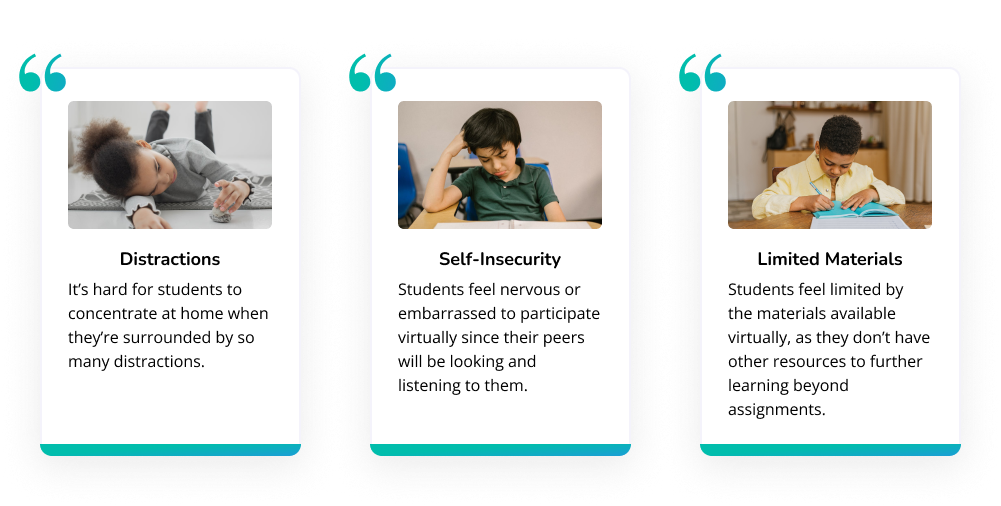
Current virtual experiences consist of:

user interviews
While it can be convenient sometimes, virtual learning is currently a messy experience.

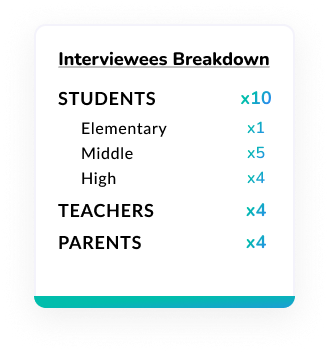
We interviewed 18 stakeholders: students who learned virtually, teachers who taught virtually, and parents who were involved with their child’s virtual education. Structured interviews were conducted using Zoom ranging from 30 to 60 minutes.

The goal was to eliminate bias and empathize with students by comparing the experiences of in-person and virtual schooling, identifying current edtech platforms' painpoints, and visualizing the day-to-day schedule of remote schooling.  ‍

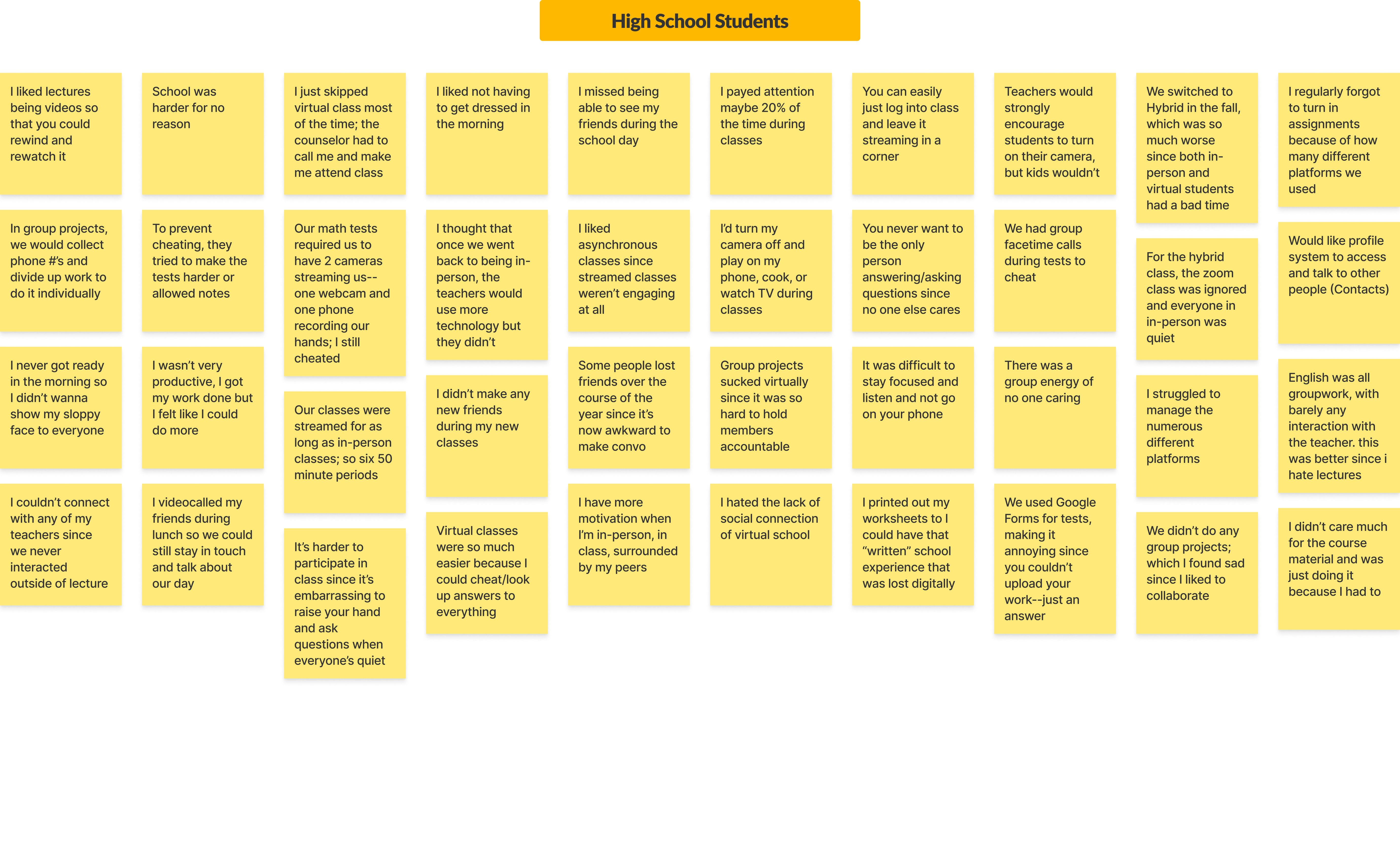
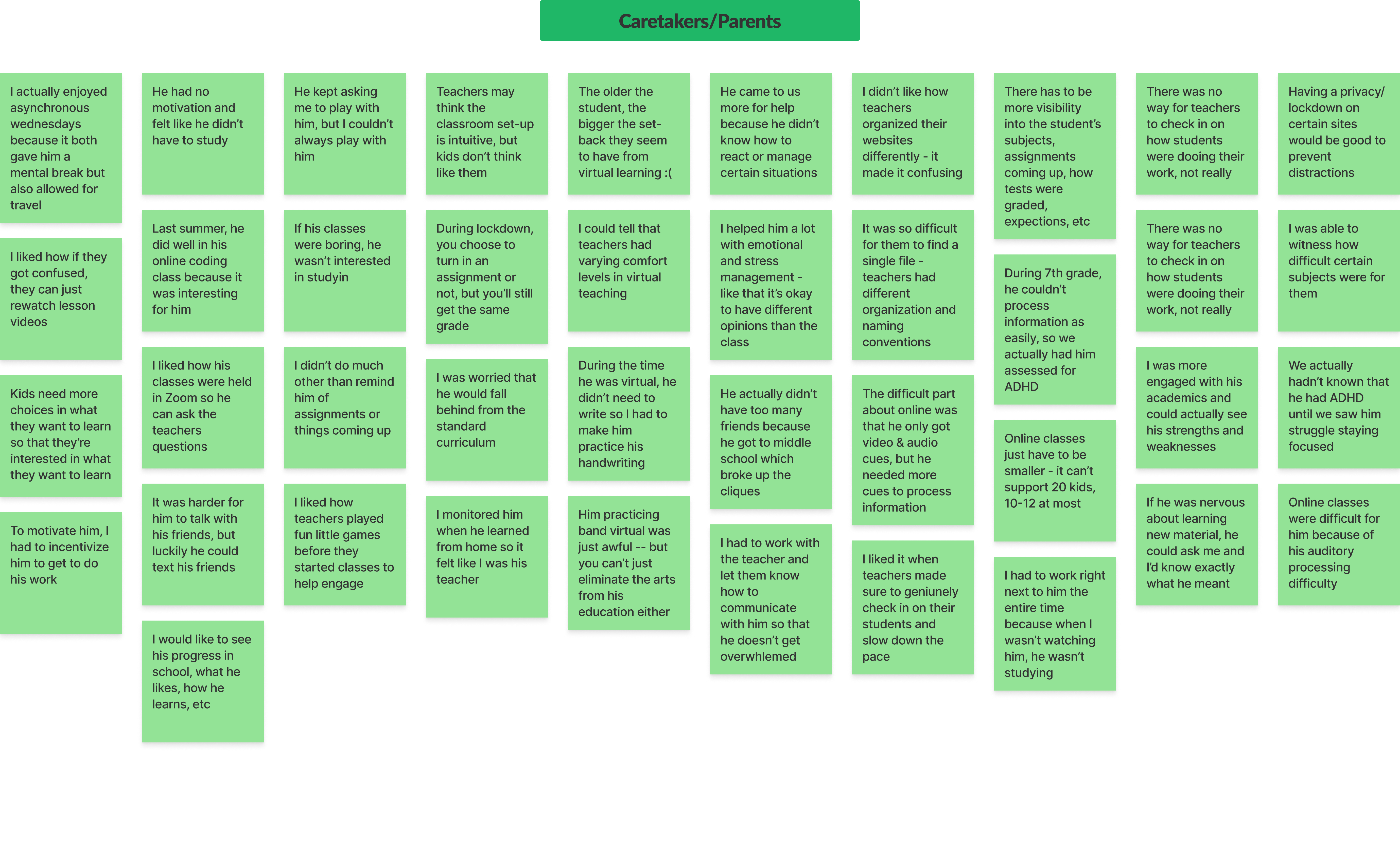
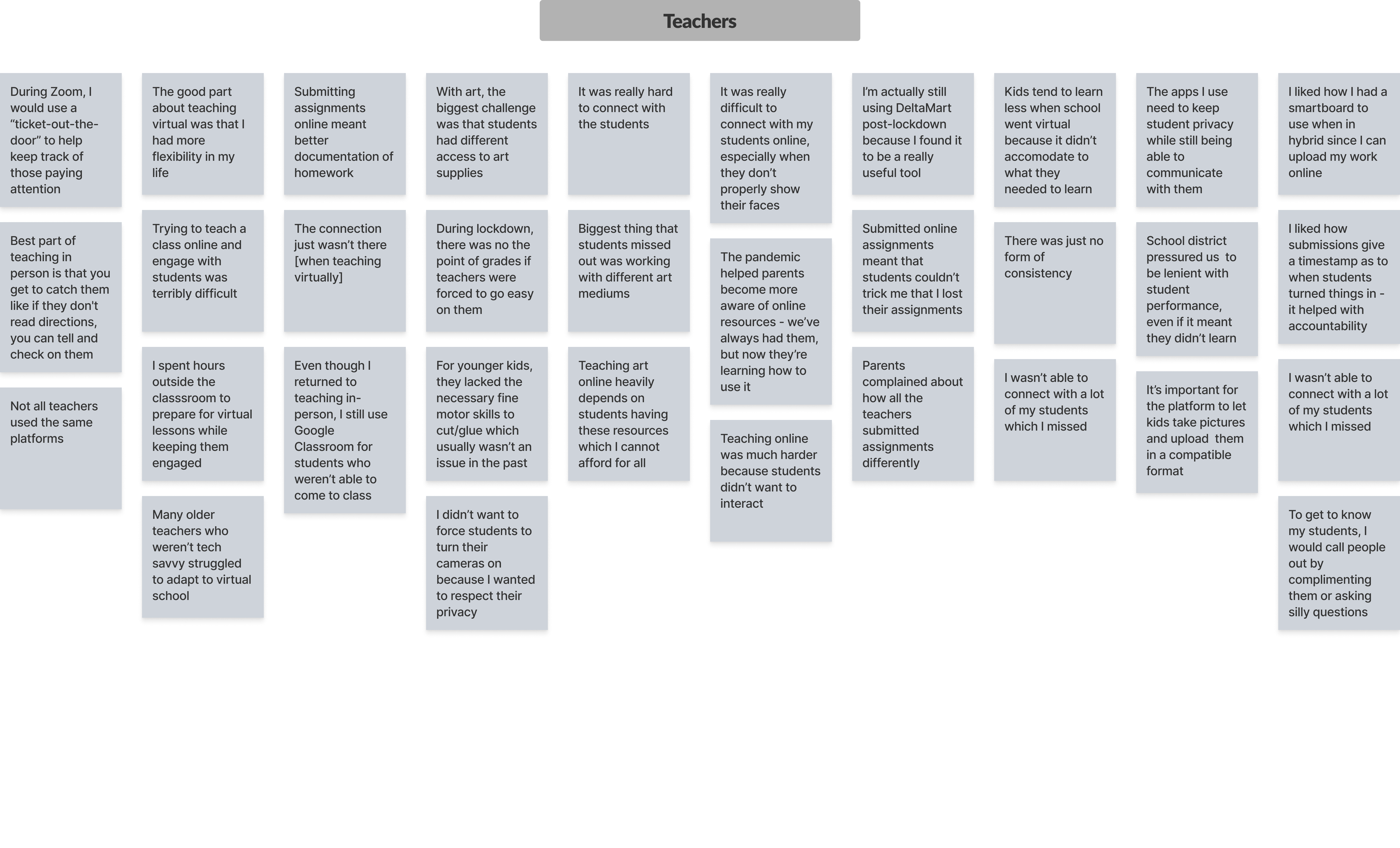
Below are interview quotes grouped based on the stakeholder group:

Some patterns we observed within each stakeholder group were:

  • Students: Staying motivated during class was difficult, especially if other students also seemed to not care. Teachers also organized their material differently, so experiences were inconsistent across teachers even though it was the same site.
  • Teachers: Online platforms made it easier to share resources, but harder to keep students engaged with the material.
  • Parents: They appreciated that they had online resources they could look at to help their children, but felt that they had to constantly remind them to stay focused.

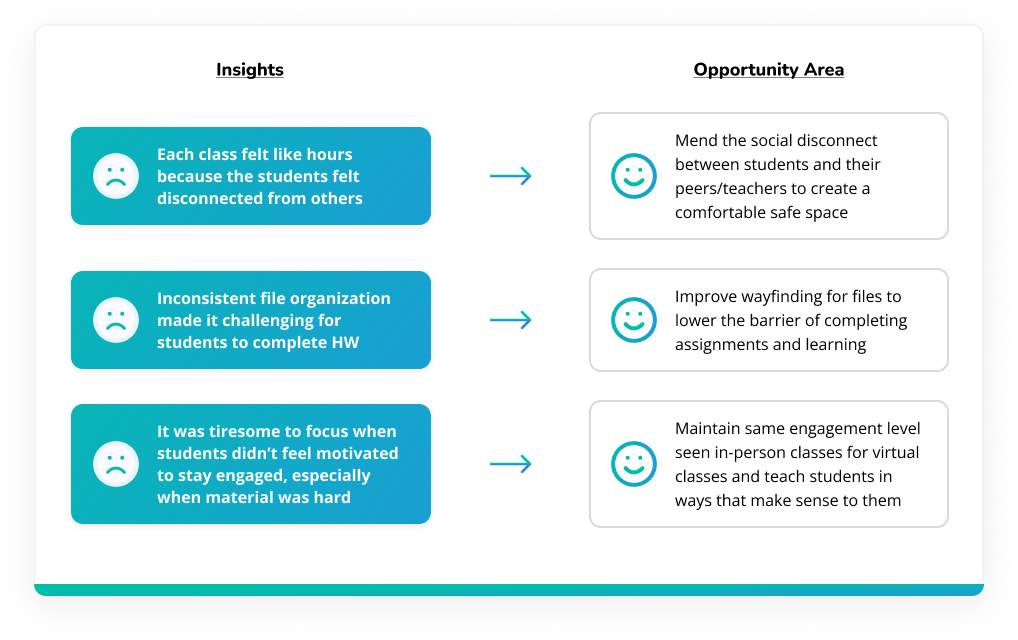
Then, we merged all stakeholder quotes and did affinity mapping exercises to see common trends across all groups:

the main insight
It's hard to consistently stay focused and easy to feel isolated from their classmates during virtual learning.

All of the interviewees mentioned struggles with participation and engagement during class. While students were in-person, it was easier for teachers to notice when a student was falling behind or not paying attention, but it's noticeably more difficult to maintain participation if there was physical distance. Additionally, students noted how it felt more natural to make friends in-person because video calls seemed to formalize the process, making it more uncomfortable and harder to reach out.
on the market
The product should embody simplicity, organization, and flexibility.
Students have a difficult time navigating through the myriad of platforms used by teachers. They find it hard to reach out to the teacher, staying in-contact with their friends, and finding course materials. Sometimes, even on the same platform, teachers can organize their material differently, creating inconsistent and confused experiences for students.
The competitive analysis of existing edtech platforms combined with our insights and opportunity areas revealed value creation through simplicity, organization, and flexibility.
Furthermore, many education platforms focus on either high school students getting ready for college or early education: despite middle school students also experiencing new life stages such as puberty and desire to socialize, there aren't many helpful education platforms available. Therefore, we decided to focus specifically on middle school students as our primary target group.
empathy maps & personas & journey map
Empathizing with the stakeholders

After conducting interviews, we analyzed quotes to create empathy maps, personas, and journey maps for each stakeholder type to further understand the people we’re designing for. By compiling their quotes and applying them into how we think they would think, act, and do, we extracted key expectations, motivations, and painpoints each stakeholder had within the educational system which grounded us during design decisions.

feature ideation & info archs & user flows
What does socialization and personalized learning look like in education?

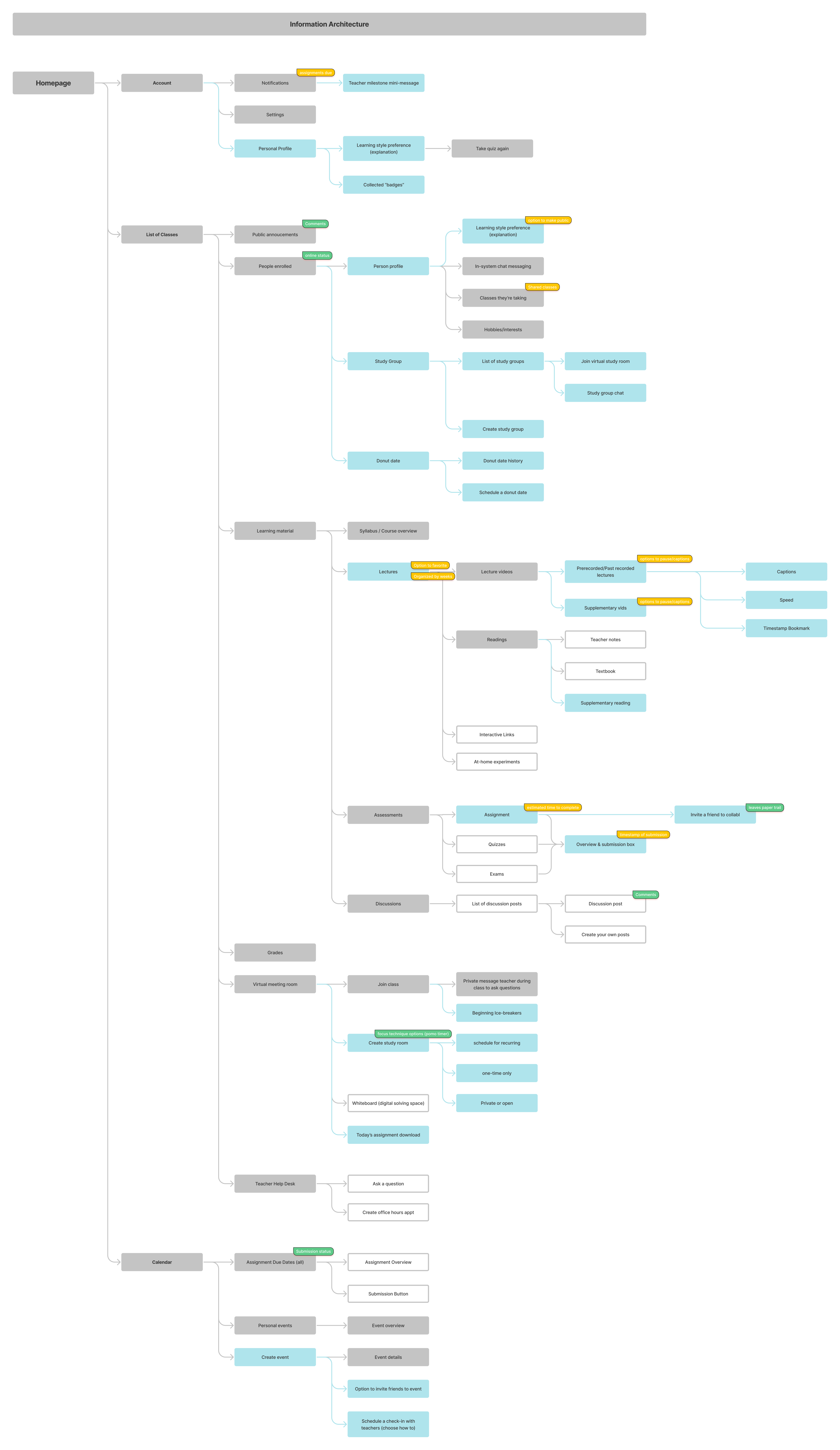
Utilizing the opportunity areas we extracted earlier, we ideated using sticky notes and grouped them into the two themes of "socialization" and "personalized learning." From there, we combined and extracted key ideas to create out feature ideations. Initially, we were conflicted as to what type of platform we wanted this to be on but settled on web with an option for a mobile app for accessibility measures.

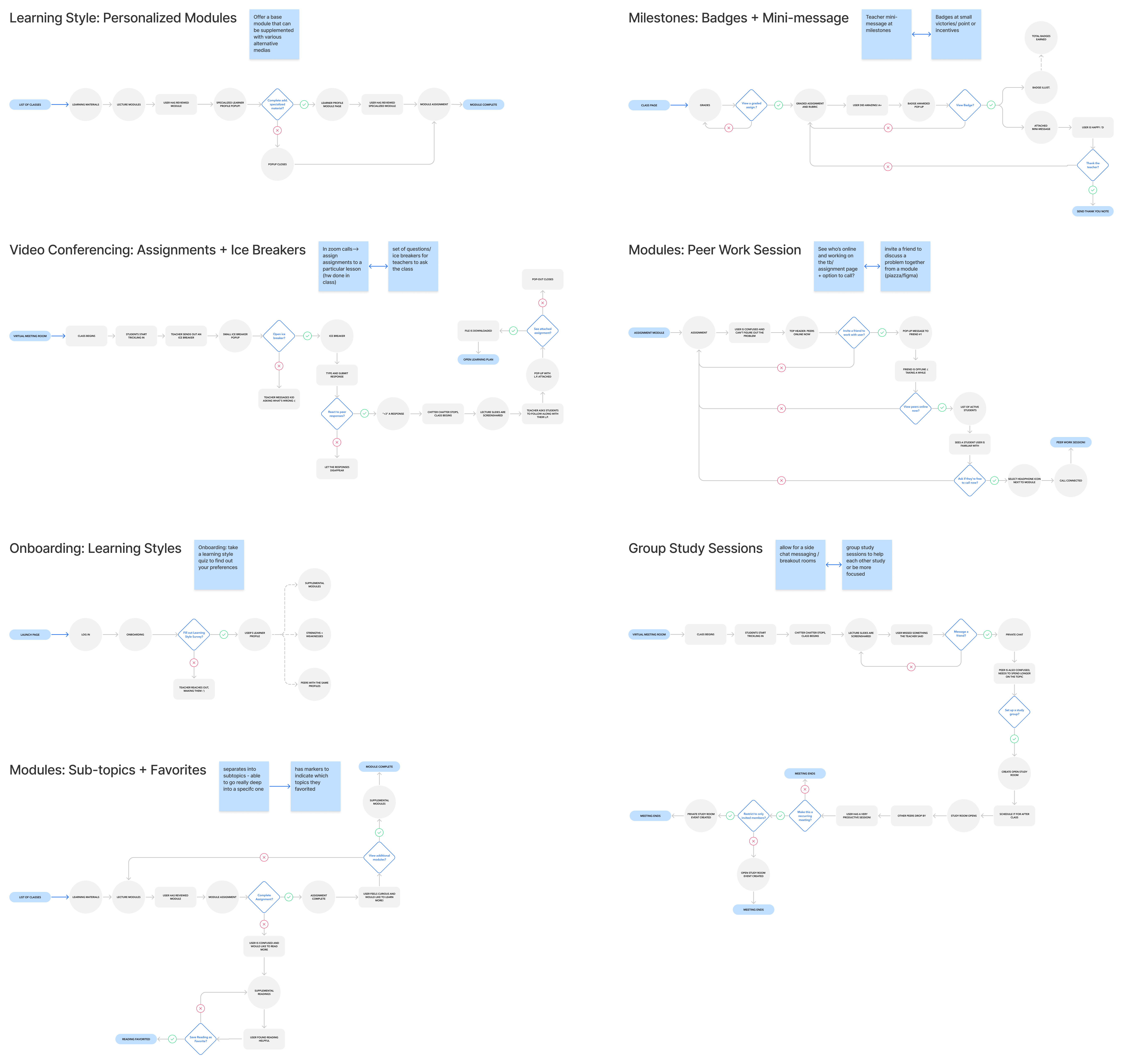
Now that we had features that we wanted to develop, we created an information architecture to ensure smooth intuitive user experience. We also created several user flows regarding the features in order to help plan where we wanted these ideas to be nested within our product.

USER TESTING
Eliminating bias to ensure user-centric experiences

We made several more adjustments to upgrade our low-fi wireframes to mid-fi for user testing. Our testing methodology was five separate 45 minute semi-structured interviews with middle school students. In addition, we asked them to think aloud as they went through specific flows to see how comfortable it was to navigate between the screens. Based on their feedback, we continued to iterate on our screens and finalize on branding for another week before bringing them up to hi-fis.

For the interviews, we asked them questions such as:

  • “How often would you think you’d use a feature like this when working on an assignment?”
  • “Would this feature encourage you to engage with your peers?”
  • “What are some concerns you have with the features, at a glance?”
final solution
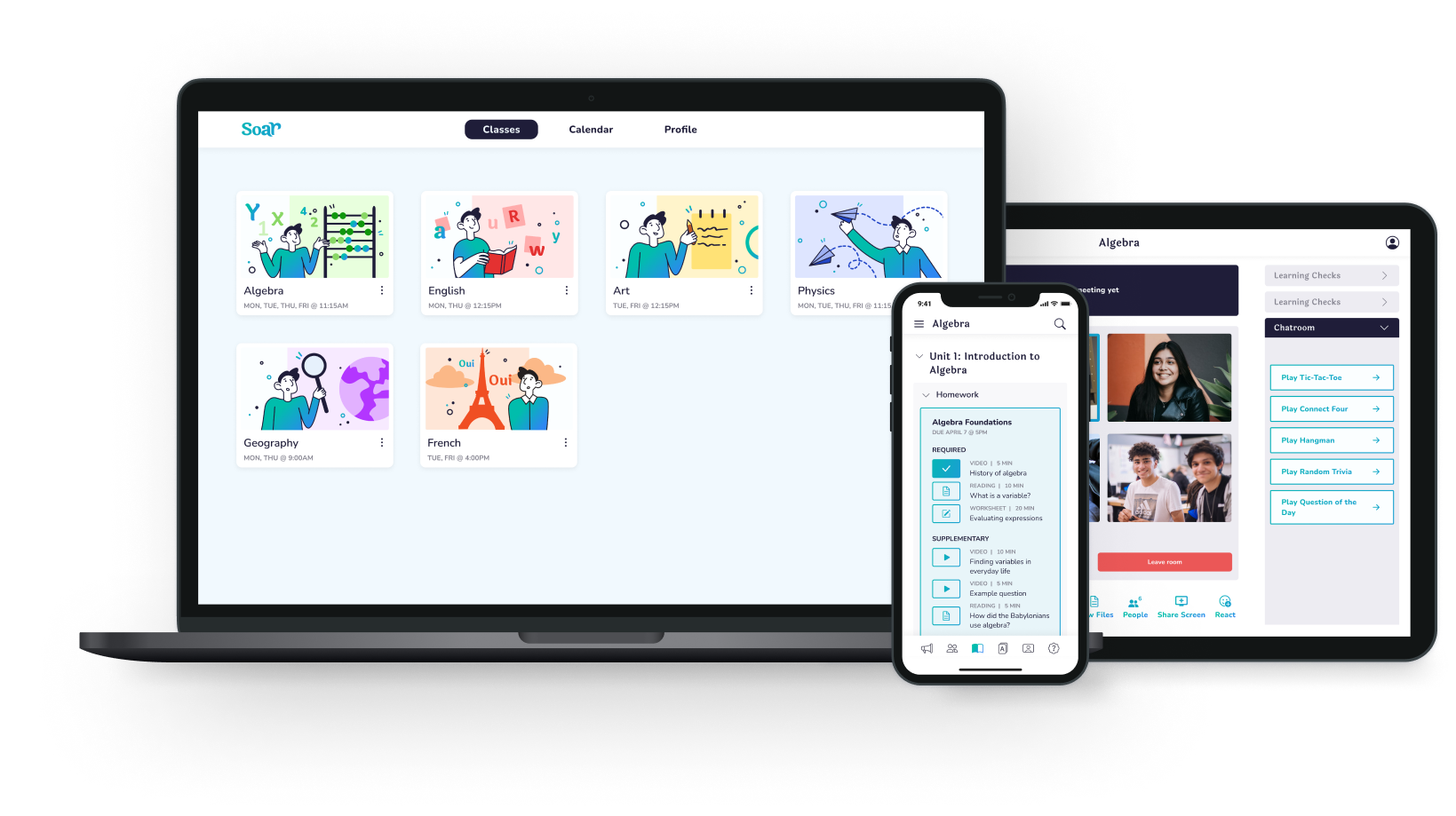
A simplified learning management system for virtual middle school students

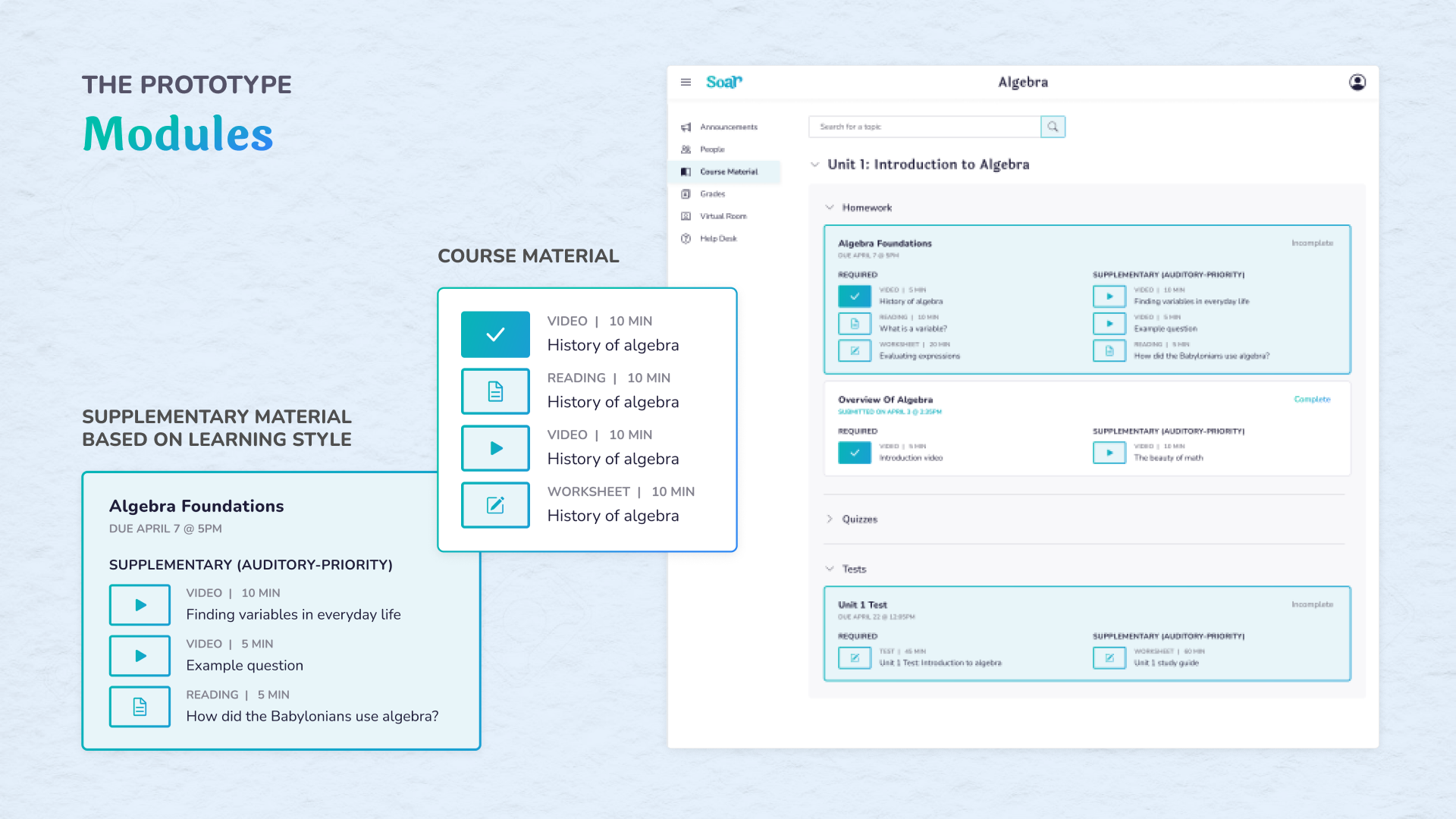
Soar enhances socialization skills in students by encouraging self-confidence and active participation through collaboration. As an adaptive flexible platform, it also offers more personalized, self-paced, and self-directed learning to match the needs of each individual student.

Concluding thoughts
Lessons I've learned

This was my final senior project in school, and I thought it was fitting to do it on education, specifically virtual learning as my two years in undergrad were significantly affected by the pandemic. It was a fun challenge to take on since I myself was a student directly affected by virtual learning, but eliminated my personal opinions during research. After all, this isn't a product for me, but for others.

☀️
What went well
Removed my bias during user research. All of the design decisions were established and validated from user interviews and needs. This was further supported through user testing.
🌧️
What I wished went better
Additional user testing. Due to time constraints, there wasn't enough time to schedule in more user testing due to the students' schedules. I wished we were able to do it at least once more after we made revisions to further refine the product.
🌈
Future improvements
Experiment with trending technology in education. Currently, VR/AR is gradually becoming more integrated into education, so I wished I had more time to dive into how incorporating such technology could further challenge what education could be.
↑ Scroll to the top :) ↑